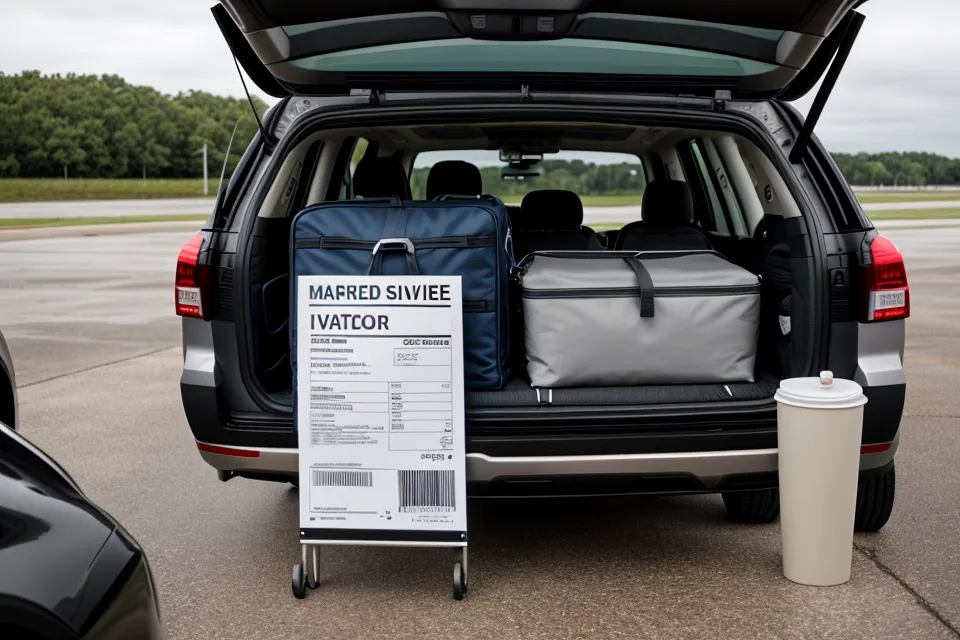
Four duffels, a cooler built like a footlocker, and already too much math for one parking lot. We're standing at the Zion Canyon Visitor Center lot in Springdale, trunk popped, and the "Standard SUV" waiting for us looks like it shrank since last year's loop. This is the family road trip — my wife, both kids, me, five days chasing pieces of the Mighty 5 — and the rental car class on the paperwork already doesn't match what's parked in front of us.
Ever since self-booking became my job instead of the corporate desk's, I've kept a spreadsheet of every reservation — class booked, class delivered, what it actually swallowed in cargo space. By week eight of logging those rows, I'd stopped trusting the name on the contract and started trusting my own notes on cubic feet instead. Buried in that same habit is a mistake I kept repeating: adding my wife as a second driver on every booking by default, never once comparing what each brand actually charged per day for it. And somewhere in my inbox sits a DFW receipt with no toll-transponder line on it at all — I read that email twice before I believed what wasn't there.
The "Standard" Badge Rarely Matches What Shows Up
A "Standard" contract in my regular job means you get what you asked for. A Standard SUV on a rental reservation works more like that printer salesman who waits until you're signing to mention the extended warranty. The terms shift the second you hit the lot. Agencies lump cars into buckets like Intermediate, Standard, and Full-size, and the vehicles inside those buckets can be wildly different from each other, which matters a lot more for national park logistics than it ever did on a one-night sales trip.
On paper, the benchmark Standard SUV is something like a Ford Explorer, with about 36.3 cubic feet of cargo room behind the second row. That sounds generous until the "or similar" on your confirmation turns out to be a crossover that barely clears 30. I've seen Intermediate SUVs, like a Toyota RAV4, list 31.5 cubic feet. Close on a spec sheet, five cubic feet short in real life, which is exactly one duffel bag or a week of groceries for four people. Standing in that Zion Canyon Visitor Center lot, cooler half in and half out of the liftgate, five cubic feet stopped being a rounding error and became the whole argument.
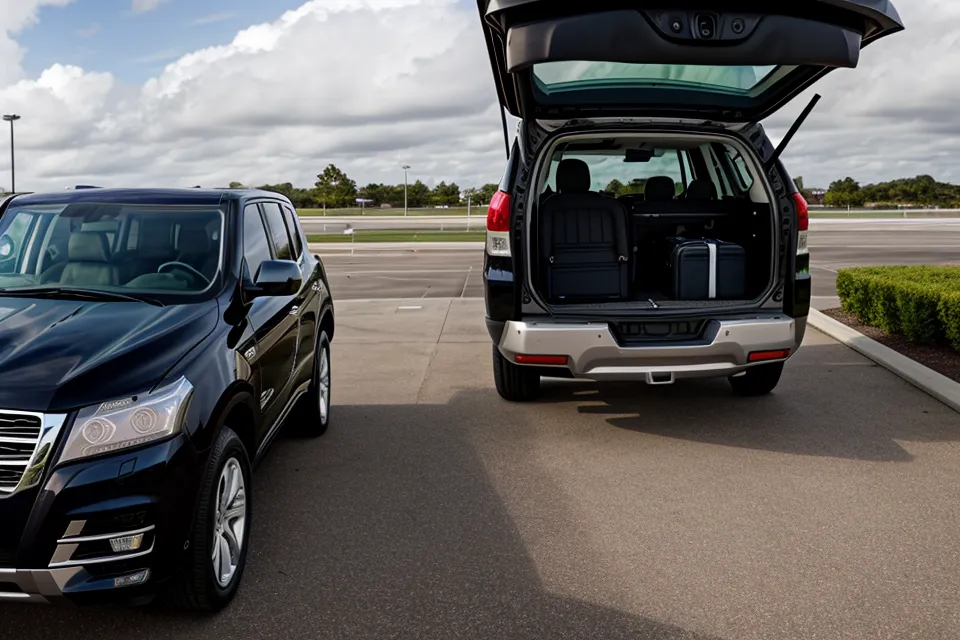
The ACRISS car classification code on your confirmation is worth decoding before you ever get to the counter. An "S" puts you in Standard territory, an "F" bumps you to Full-size — but some brands will tell you a Jeep Grand Cherokee and a Nissan Rogue sit in the same class, and they don't, your knees will tell you that three hours into the drive. Ours showed up a different trim than what was on the sheet entirely. No roof rails, which meant the cargo box we'd planned on strapping gear to had nothing to clip onto. Fifteen seconds walking around the vehicle before signing would've caught it; I didn't bother, and we found out at the first gas stop instead.
How Much Gear Actually Fits a Family of Four?
Gear, not people, wrecked the math on the grocery run before the trip even started. We'd topped off at the gas station in Springdale on the way in, then loaded duffels, hiking poles, gallon jugs of water, and enough snacks for four people to survive a week of trailheads. By the time we reached the Zion Canyon Visitor Center lot that first morning, I was rearranging bags in the back because I couldn't see out the rearview mirror. Classic rookie move: you book for the people and forget the gear takes up a person's worth of space on its own.
A Full-size SUV, something like a Tahoe or an Expedition, usually seats seven or eight, which sounds like the obvious answer for four people and a mountain of gear. It isn't. The interior room is real, but a three-row beast turns into a liability the second you're hunting for a spot at a crowded trailhead. That same Zion Canyon Visitor Center lot fills up by mid-morning, and an oversized SUV just can't squeeze into what's left. You end up circling for forty minutes while the mid-size crossovers slide into the tight spots and start hiking without you.
I've written before about Full Size SUV vs Minivan for Utah National Parks Trips, and the debate usually comes down to exactly that parking footprint. For this run I stuck with a Standard SUV and made sure it actually had 4WD or decent clearance, because plenty of rental agencies group AWD and 2WD versions under the same SUV listing regardless of drivetrain. You don't want to learn that detail on a washboard road an hour from cell service, with nothing but a Full-size badge on the contract and a sedan's ground clearance underneath it.
The Inventory Gamble Behind a 7-Day Park Pass
The math on a 7-day pass has to work before anything else does. Loop the whole family out of SLC, around the Mighty 5 route, and back, and you're usually pushing right up against that window. Booking through some aggregators is a gamble on actual inventory once you hit the spring rush — I remember one mid-December booking where the rate looked like it saved roughly a tank of gas worth of money, only to find the Standard I'd reserved was gone when I got there, and the counter tried to "upgrade" me into a minivan that looked like it had survived a small war.
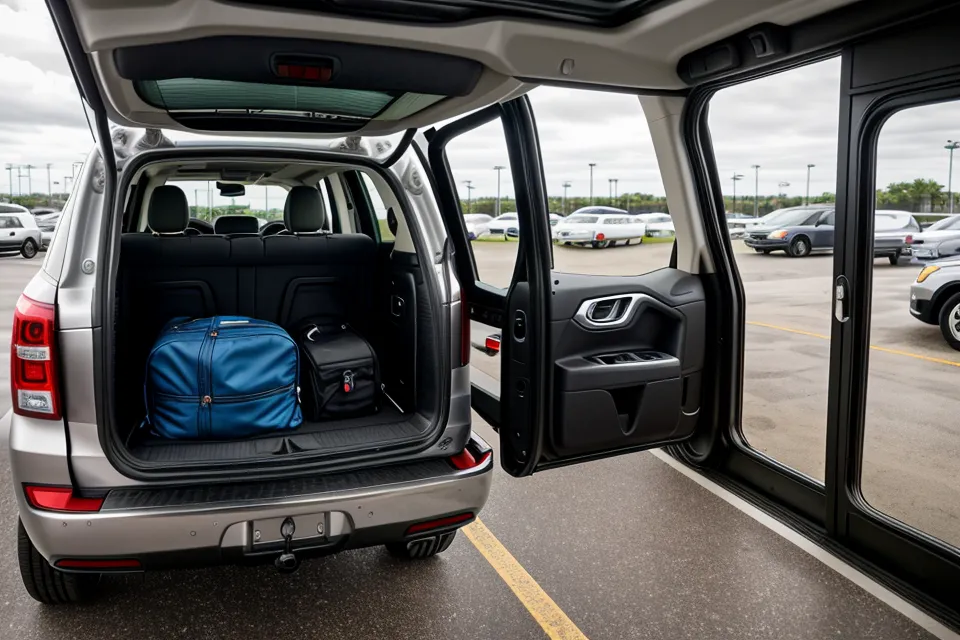
Some booking sites are noticeably better at showing the real gap between what's listed and what's actually sitting on the lot. I've had decent luck with Spring Break Road Trips and the Rental Inventory Gap: My Notes on Trip.com and Discover Cars for seeing what's genuinely available at the SLC counters instead of just a placeholder on a screen — the difference between a quick pickup and standing around for an hour while they "clean" a car that just got turned in.
Check the Cargo Specs Before You Sign Anything
By the time we rolled back into SLC for the return, the car was a disaster — fine red sand ground into every seam of the seats and cup holders, the kind every Southwest driver recognizes on sight. Our flight home left early enough that the return bay still had its fluorescent tubes buzzing overhead, that flat early-morning light making the mess look even worse than it was. I spent ten minutes with a gas station vacuum trying to make it presentable so I didn't get hit with a cleaning fee bigger than the rental itself.
My read on all of this, after enough of these loops: book the Standard class for a family of four, because it's the sweet spot between real cargo room and still being nimble enough to park at a trailhead without a spotter. Don't let the counter agent talk you up to Full-size unless you're actually traveling with six people, or you enjoy three-point turns on a canyon road. But the one habit that actually pays off every time is checking the ACRISS code and the real cargo specs against your gear before you sign anything — the class name on the confirmation is a guess, not a guarantee, and the five minutes it takes to verify it beats finding out in a trailhead parking lot.