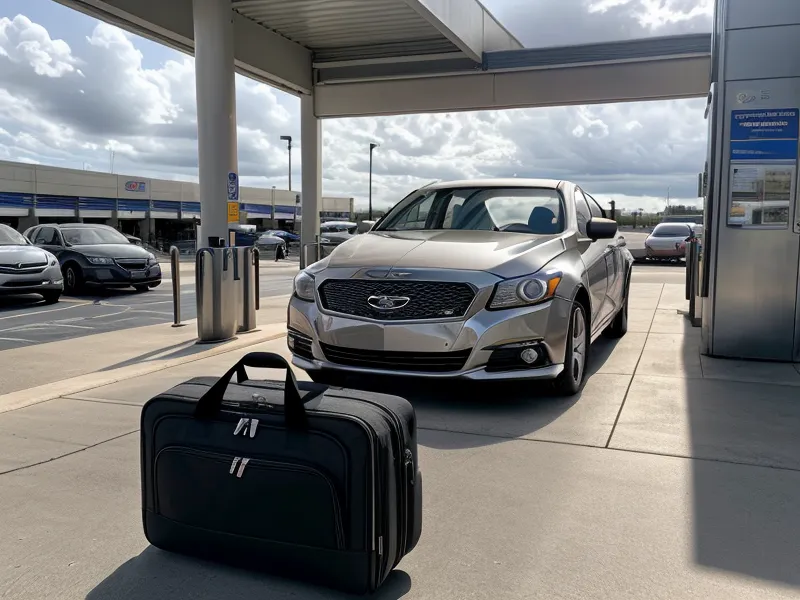
Four separate insurance products got offered to me in under two minutes at the Harry Reid International consolidated rental car center outside Las Vegas, stacked one after another before I'd finished loading the kids' gear into the back and wiping a coffee spill out of the cup holder from the drive over. That number is the whole story with rental car insurance in Utah's national parks: U.S. counters can pitch up to four distinct protection products in one breath, and saying yes to the full stack can nearly double what you pay for the car itself. Zion was the destination that week, Bryce tacked on after, and the SUV at the counter came out a trim below what I'd booked with the tank sitting at half instead of full — its own annoyance, and a sign of how little attention the reservation gets once the upsell conversation starts.
Quick disclosure before the breakdown: a few of the booking platforms named below pay me a commission if you click through and book, at no extra cost to you. My neighbor Lindsey Bergstrom, two doors down from us, is deeply skeptical of any site that earns money off what you buy through it, and she's not wrong to raise an eyebrow about that. So here's the rule I hold myself to: I only write about platforms and coverage I've actually run a real booking through, and if one of them tried to upsell me sideways, that's going in the post too.
Rental Car Insurance in Utah National Parks: The Four-Layer Upsell
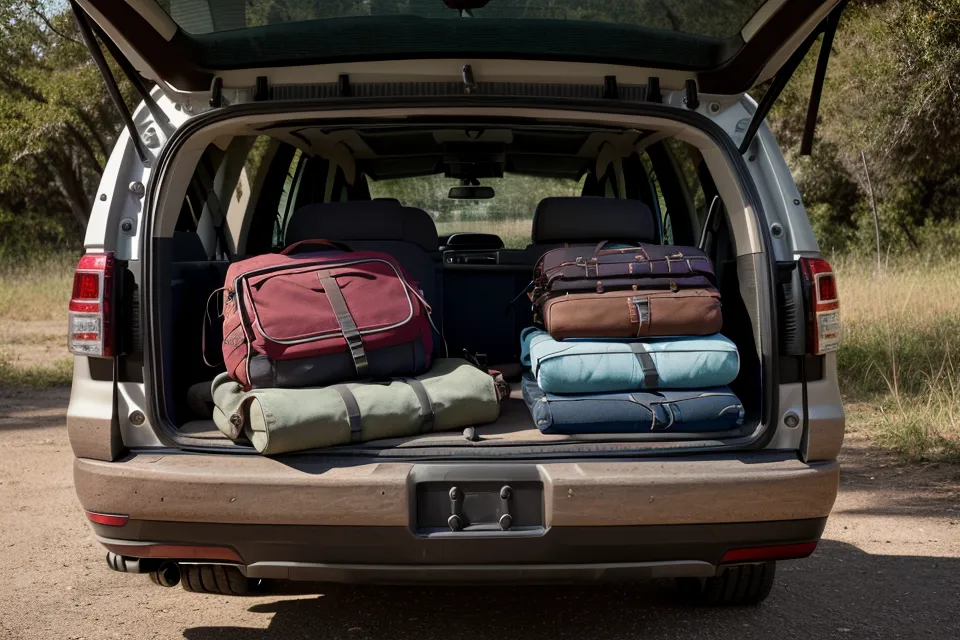
The four products break down like this. Collision damage waiver, sometimes labeled loss damage waiver (CDW/LDW), covers the car itself — dents, a cracked windshield, the usual desert-road damage. Supplemental liability insurance (SLI) raises the liability ceiling above whatever's baked into the rental agreement by default. Personal accident insurance (PAI) is travel medical coverage wearing a rental-car costume, covering you and your passengers if someone gets hurt. Personal effects coverage (PEP) protects whatever's riding in the trunk — hiking packs, a cooler, the kids' gear. Agents almost never walk you through all four by name. They bundle the stack into a tier called something like "Premium Protection" and quote one number, and that number is why saying yes to everything can nearly double your daily rate before you've left the rental lot.
Tell a counter agent you're headed for Zion National Park or Bryce and watch how fast a single pebble on Utah State Route 12 turns into a reason you need every layer they're offering. The gap between the aggregator's coverage and the counter's own LDW is usually enough to cover a decent dinner for four — the counter agent on that trip quoted close to thirty dollars a day for their tier, and the coverage I'd already locked in through Discover Cars ran a fraction of that for the same dates.
Does Your Credit Card Already Cover This?
My wife asks this every year, since she runs the numbers on our family budget and treats a maybe-covered expense as a red flag. The honest answer: it depends on the card, and even when there's coverage, it's usually secondary — your own auto policy has to answer first, and the card fills in behind it. I'm not going to pretend I know every card's fine print well enough to walk you through the claims mechanics here; that's a rabbit hole for another post. What I can tell you is that the aggregator coverage I've used, like the plan behind my Discover Cars review for domestic travel across the Southwest, works more like primary reimbursement — it pays out directly instead of routing you back through your own insurer first. Whichever card or hold you use to pick up the car matters too; a debit card typically means a heavier hold and sometimes a harder look from the counter than a credit card does, which is its own line item worth checking before you fly.
The Counter Upsell Follows a Script
Every version of this pitch follows the same script the printer salesman back home runs — the one who waits until you've already picked the hardware before mentioning the extended warranty that supposedly keeps the thing from catching fire. At a rental counter the moves are: wait until you're committed to the car and have a flight to catch, introduce a low-probability but high-fear scenario — wildlife on the road, a scratch from a rock wall, a wash you didn't know was there — and frame declining as the risky choice instead of the informed one. Agents will sometimes claim a third-party or aggregator policy "won't be recognized" if something happens. That's not a coverage rule. That's the moment in the pitch where saying no starts to feel expensive.
For a while I assumed booking through the American Express Travel portal was enough on its own, that if the portal showed a rate, I'd already done the comparison shopping. That assumption cost me — I ended up paying full counter-tier insurance on that trip because I never actually checked the portal's number against an aggregator or the brand directly, and by the time I noticed the gap, I'd already signed at the counter. The same pressure shows up around trunk space. Book a "compact" to save money and the counter will often force an upgrade at check-in, insurance and all — I've written separately about how much smaller a compact actually runs against an intermediate, and that size gap explains a good chunk of the upsell math you'll run into at a Utah counter. That's part of why I check both numbers now before I ever reach a counter — I still remember standing at a DEN rental shuttle stop, scrolling between an aggregator quote and the counter brand's own app on my phone, just to see which price actually held once I got to the desk.
Glass and Gravel Cause Most of the Damage Claims
Windshields take the worst of it out here. The roads leading into Arches and Capitol Reef kick up gravel like they're built for it, and I picked up a chip on one SLC–DEN run that the return agent spotted before I'd even parked, the way an appraiser checks a stone. Collision damage waiver typically extends to glass and tires, which happen to be the two things most likely to fail you out here, so if you're skipping the counter's LDW because you've got aggregator coverage, confirm that glass is actually inside what you bought.
Before you leave the lot is the only time that inspection actually matters — once you're on the highway, whatever's already there becomes an argument you'll have on the return end instead of the pickup end. Walk the car, note anything on the paperwork, and take a few photos with your phone before you pull out, especially around the windshield and lower doors where desert gravel does its damage. Two minutes, and it's the cheapest insurance move on this whole list.
Where Coverage Stops: Pavement Ends, So Does the Waiver
Almost every rental agreement I've signed in Vegas or Salt Lake carries a clause that voids all of it — theirs, yours, the aggregator's — the moment your tires leave pavement. If the plan is a wash or a backcountry trailhead past where the maintained road ends, you're on your own regardless of which "Full Coverage" tier you bought. I'm not a lawyer, just someone who reads too many rental contracts waiting for a delayed flight. But that clause is consistent enough across brands that I treat it as a hard rule now: paved scenic routes only, leave the rock crawling to people running their own vehicles.
There's a piece I've written elsewhere about running third-party coverage against a sales rep's solo trips; testing that same policy against a family parks trip is a different exercise, because unpaved access roads and a second driver on the agreement change what the policy actually has to cover. And a second driver is its own line item before insurance even enters the conversation — my wife goes on the agreement for every parks trip, and that fee shows up regardless of which coverage tier we pick.
On-airport pickup is worth paying for on a trip like this. AirportRentalCars is the one I use to confirm which brands are actually inside the terminal versus a shuttle ride away, because I have zero appetite for a twenty-minute wait with kids already asking when we'll get to the park — the money you'd save going off-airport gets eaten by time you don't get back, and that trade only tips the other way if you're traveling light and unhurried.
Comparing the Booking Platforms for Utah Coverage
Three platforms cover most of what I need for a Utah run, and the honest comparison isn't just about the lowest number on the screen — it's about what that number turns into once you're standing at the counter. I've tracked the gap between aggregator quotes and walking straight up to a brand's own desk enough times to know it isn't a fixed percentage; some weeks direct booking wins, most weeks it doesn't, and I've laid out the actual pattern in a separate post if you want the full comparison.
Discover Cars is my default for the parks trips. It pulls from local off-airport partners I wouldn't otherwise find, cancellation on my bookings has been free up to a couple of days out, with one refund landing back on my card within four days of cancelling a Vegas booking. Book longer, too, and the per-day number usually drops enough to matter, even though nobody puts that discount on the confirmation page up front — you have to compare the weekly total against the daily rate yourself to catch it.
Trip.com is the backup when Denver or Salt Lake shows sold out everywhere else — the inventory pool includes off-airport and global vendors the US-first aggregators skip past, and on one DEN weekend it pulled a working mid-size booking after the other two both came back sold out. I wrote more about using them for a Vegas booking in my piece on booking cheap car rentals in Las Vegas using Trip.com for business; the interface reads a little more "global" than I need for a quick hotel-and-return trip, but the inventory access has bailed me out more than once.
AirportRentalCars stays in the mix for the 6:15-AM-flight scenario, when you want to know exactly which brand you're getting and exactly where they're parked relative to your gate. One thing none of these three platforms fixes: picking up in one city and dropping in another. A Vegas pickup with a Salt Lake drop would tack on a one-way fee that erases most of whatever you saved on insurance, so for the parks loop I always book the round trip back through the same airport.
Travel Tips for the Counter Conversation
Look, the counter conversation doesn't have to be adversarial, but it helps to walk in knowing the shape of it. Count how many separate products are being offered before you agree to anything. Ask which one covers the car, which one covers people, and which one covers what's in the trunk, and decline anything that duplicates coverage you already have through an aggregator or your own policy. That's the one habit that actually changes the total on your receipt: not luck, not loyalty status, just knowing the four-part structure going in.
If you're still sorting out the Salt Lake side of this, I've got notes on how to find the best airport car rental deals in Salt Lake City, including why some "deals" cost more in rideshare fares than they save at the counter. For a parks trip specifically, I'd start pricing coverage through Discover Cars — their Southwest SUV inventory has been the most consistent option I've used, and the coverage has handled the windshield-chip claims that come standard with a Southern Utah road trip.