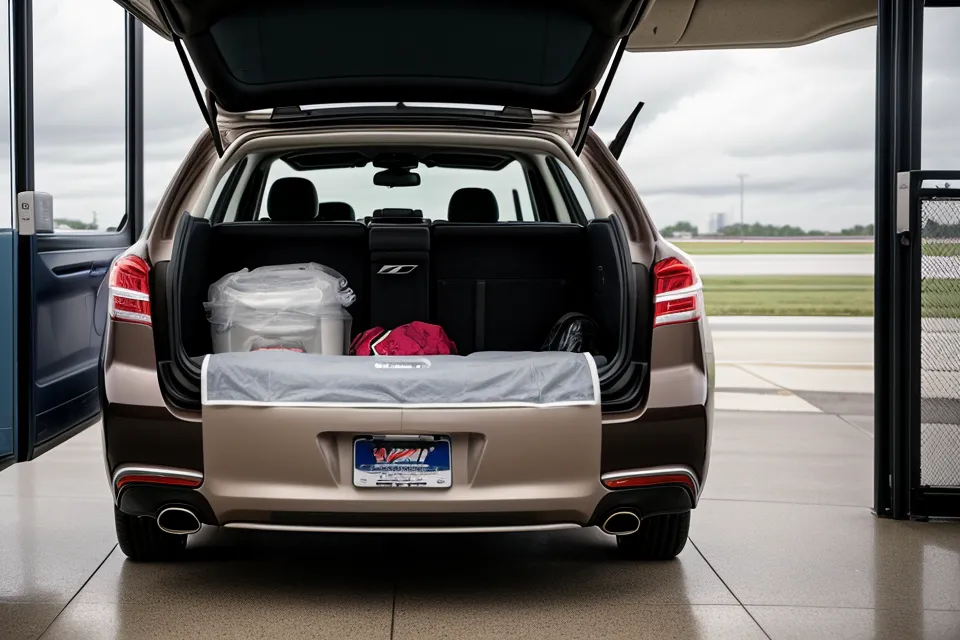
Why does the word "compact" get you a Chevy Spark at one counter and something a lot closer to a Corolla at another, same airport, same afternoon?
Here's the short version, from someone flying the SLC-PHX-LAS-DEN-DFW circuit most weeks for sales calls: car classification at airport rentals is a loose agreement at best. Three big conglomerates run most of the counters across the Mountain West and Southwest, and each one draws its own line between "compact" and "mid-size." A rep booking business travel on a tight schedule finds that out the expensive way, usually standing at a counter staring at a trunk too small for a sample case.
Why Does "Compact" Mean a Different Car at Every Counter?
Most weeks I'm flying out of Salt Lake City International Airport for calls across the Mountain West and Southwest, and the rental counter there has turned into its own kind of negotiation. Ask for a compact three times in one month and you might get three different cars, none of them matching the stock photo on the booking page.
There's an actual industry code behind the confusion, the ACRISS code, a short string meant to standardize category and transmission across brands. In practice it still leaves plenty of room for one company's compact to be another's economy car, and nobody prints that gap on the booking confirmation.
The full breakdown of where compact actually ends and intermediate begins is its own topic I get into elsewhere; what matters here is how often that gap shows up right at the counter, when you're tired and just want the keys.
A DFW Pickup Where the Cheaper Rate Cost Me More
Terminal D at DFW, arrivals level, is where my last real lesson in this happened. I'd booked an off-airport lot a few minutes away because the online rate looked like it would save about enough for a coffee over the on-airport counter, and the shuttle looped the terminal twice before it finally circled back for me. That ate about forty-five minutes I didn't have before a Tuesday client call. Forty-five minutes, gone, before I'd even checked into the hotel.
That trip is also why I read the fuel line on a paper rental agreement before signing anything now, instead of after. The little gauge icon next to "fuel level" had the needle drawn at seven-eighths instead of full, and if I hadn't caught it, I'd have been paying for that last eighth at whatever rate the counter charges for topping off themselves.
A neighbor of mine treats his five a.m. CrossFit sessions at a gym over in Sandy like a non-negotiable meeting. I've started treating that fuel-marker check the same way, because skipping it once is exactly how you end up paying for someone else's math.
Does Booking Through an Aggregator Actually Beat the Counter?
Most weeks, yes, but not always, and the real difference usually isn't in the headline number. An aggregator's quoted price and the all-in total that prints on your receipt after taxes, concession fees, and whatever add-on you didn't decline can be two different numbers entirely, and that gap is the whole aggregator-versus-direct argument in miniature.
Status with one specific brand used to matter to me more than it should have. These days I weigh loyalty perks against whatever the actual rate is doing that week, rather than defaulting to the brand with my number already on file.
Off-Airport Lots and the Shuttle Time Trap
Off-airport lots do run cheaper more often than not, and the habit I built after my first Phoenix mess is where I actually track which ones are worth the detour, something I wrote up in more detail in my Discover Cars Review: My Tracking Notes from 35+ Bookings and the Phoenix Trip That Changed My Habits. One-way drops are the other place the math shifts fast, since a fee tacked onto returning the car somewhere other than where you picked it up can erase most of what an off-airport rate saved you to begin with.
Anyone who's crossed a rental lot in Phoenix around two in the afternoon knows the asphalt throws heat straight up through your shoes, and the air coming off a line of parked compacts smells like warm tire rubber baking in the sun. Not pleasant. Not really optional either, if your flight landed at two. That heat isn't really an argument for or against off-airport pickup, it's just the reason nobody standing in it is in the mood to read fine print about shuttle schedules.
Reading Through the Counter Upsell
Counter agents pushing the upgrade or the extra coverage remind me of a printer salesman who waits until you're already signing the lease to mention the extended warranty, which is exactly why the pitch works when you're tired and just want the keys.
Whether to buy their coverage or lean on a third-party policy bought ahead of time is a bigger question than I can answer standing at a counter in Vegas with a line behind me. I don't know enough about how every third-party policy stacks up against what the counter sells, so that one gets punted to whoever actually wrote the policy, or to the agent when the language gets ambiguous.
Prepaid fuel is another one of those menu options that sounds convenient until you do the math on a tank you might return three-quarters full anyway, so I almost always decline it and plan the gas station stop myself.
Paying with a debit card at the counter instead of a credit card is the other move that can quietly complicate a pickup, since the hold they put on the account tends to run heavier and take longer to release than most people expect.
Checking the Car Before You Leave the Lot
Walking the car before pulling out, checking the trim badge against the paperwork, and snapping a photo of the fuel gauge and the bumpers takes less time than it sounds and has saved me more than one argument at return.
Adding a second driver to the contract is the fee most people forget to ask about until it's already on the final total, which matters most on the family national-park trips when my wife and I actually trade off driving.
When Should You Actually Book to Avoid Getting Stuck With Whatever's Left?
Early, generally, though not for the reason most people assume. How far ahead you book changes the inventory you're choosing from more than it changes the price, since the gap between booking a route a month out versus a week out shows up in which cars are even left on the lot.
And on short-notice sales trips, where I'm booking two days out at best, I've stopped expecting the compact I pictured and started expecting whatever's actually sitting on the lot that morning.
Longer rentals tend to carry a better per-day rate than the same dates split into two shorter bookings, which is worth checking before you reflexively book the exact trip length instead of rounding up.
Booking a refundable rate and rebooking later if a cheaper one shows up is a hedge I use more than I probably need to, but it's cheap insurance against watching the price drop the week before a trip.
Matching the Class to the Actual Route
A compact is fine for a solo hop to Dallas with just a backpack and a suit bag, but the same booking for a Mountain West national-park run with two teenagers, a cooler, and hiking gear needs at least a size up before you even reach the trailhead.
Roadside coverage matters more than the class of car on the long stretches between parks where cell service disappears for a stretch at a time, since a flat out there is a different problem than a flat two exits from the airport.
Look, the fix isn't complicated: treat the class name as a guess, not a promise, check what you're actually driving before the paperwork's signed, and weigh the off-airport math against your own schedule instead of the sticker price. None of that takes more than a phone and a few extra minutes at the counter, and it's saved me more trips than any brand loyalty card ever did.