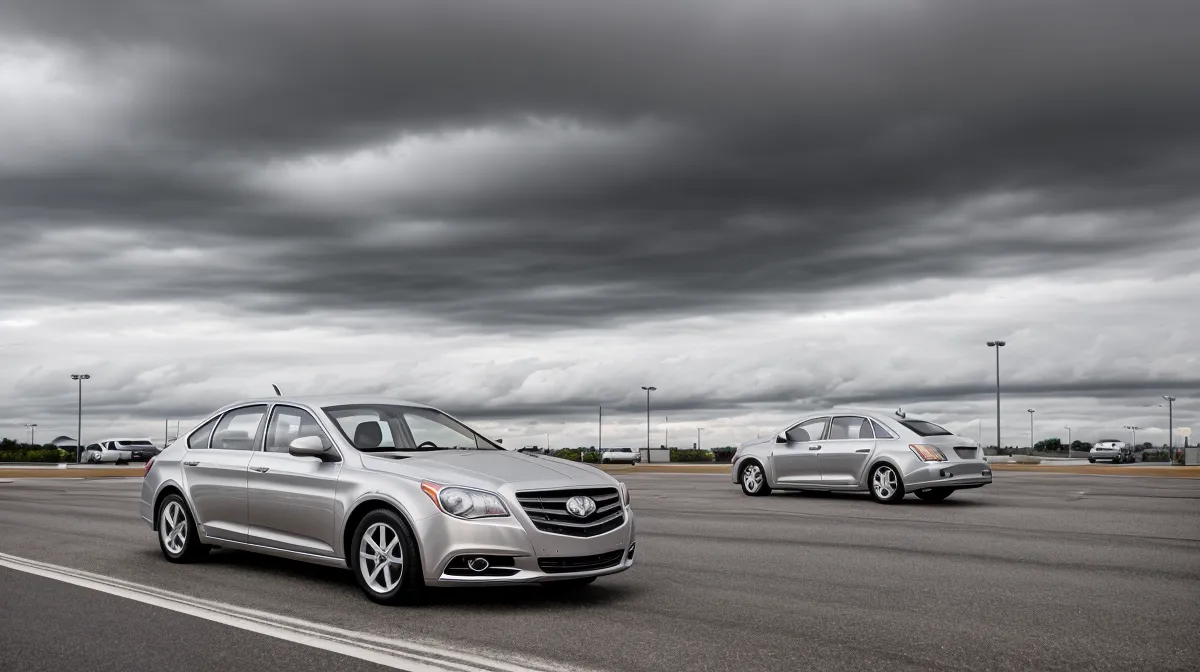
A Standard rental and a Full Size rental aren't two sizes of the same car — they're two different bets on what your trip actually needs. One bets you'll be fine with less trunk and less legroom to save a little on the daily rate; the other bets that extra room is worth the bump you'll pay at the pump. I run enough business travel through Mountain West airports — SLC, PHX, DEN, LAS, DFW — that I've stopped trusting either label until I've seen the actual trim sitting on the lot. This car rental comparison is the version of that lesson I wish someone had handed me before my expense policy changed.
Quick disclosure up front: some of the booking links below — Discover Cars, AirportRentalCars, Trip.com — pay me a commission if you click through and book, at no extra cost to you. They're the same tools I use for my own sales loops and the trips my family takes. If one of them botches a booking, I'll say so here regardless of the commission.
The DEN Booking That Ended My Auto-Book Habit
For years the expense system just auto-booked whatever vendor the corporate travel portal defaulted to, and I never once thought to compare it against anything else. That stopped on a weekend run through Denver, at the rental facility out past the terminal on Peña Boulevard, standing under lights doing that flat fluorescent flicker they do before six in the morning, waiting on a gate-checked bag that hadn't caught up with me yet. The "Standard" on my confirmation turned out to be a trim below what the board behind the counter actually listed, and the agent just shrugged like that was simply how it went that week.
At baggage claim, thumb scrolling back through the confirmation email, I caught myself rereading the confirmation number twice — it was short enough that I figured I'd fat-fingered something on my phone. That's the trip that got me actually checking Discover Cars against whatever the portal handed me by default, instead of just accepting it. On roughly two-thirds of my PHX and DEN bookings, their headline rate has beaten the default vendor rate by enough to cover a decent dinner without the expense report raising an eyebrow. If you want the fuller math on how that stacks up, I put together some notes on the best site to compare cheap car rentals for Southwest regional trips after my first year doing this on my own dime.
Why Doesn't "Standard" Ever Feel Standard?
There's an actual government classification behind the "Full-size" label, if you want to go down that particular rabbit hole — the EPA has a formula for it, and it has nothing to do with what a rental counter puts on the board. In practice, "Standard" at most counters is just a "Compact" that spent a week in the gym. I've picked up a Standard that was rated for four bags on paper and turned out to be a hatchback pretending to have a trunk in person.
A Camry or a Malibu — the two cars that seem to own the Full Size row at every Mountain West airport I fly into — genuinely swallow two roller bags and a laptop case without a fight. A Jetta or an Elantra in the Standard row makes you play Tetris for the same trip. That gap between the sticker and the actual back seat is close to what shows up comparing Compact and Intermediate rentals too — the label tells you almost nothing, the trim tells you everything.

Is the Extra Legroom Worth the Fuel on a Business Travel Loop?
Fuel is where that legroom sends you a bill later. There's a real fuel economy gap between a Full Size and a Standard or Intermediate, and on a high-mileage loop — DEN out to Fort Collins, Colorado Springs, and Pueblo in three days is a regular one for me — it adds up. Nothing that wrecks a travel budget, but a noticeable dent.
I took the Full Size on one of those loops purely because I wanted heated seats after a long stretch of early flights, and by the time I turned it back in, I'd burned close to an extra forty bucks at the pump compared to what I'd have spent in something smaller. My wife runs the numbers for a living, and she's the one who pointed that out, not me.
Picking the Right Aggregator for Each Route
For the heavy Southwest and Mountain West loops where I need to see real inventory, not just the big three brands, I default to Discover Cars. They pull in off-airport partners the major brands don't bother listing, which matters more than people think until the week everything on-airport shows sold out.
That's also what saved a family trip when every major brand at SLC was showing SUVs as sold out over a holiday weekend. I checked Discover Cars again and found a local partner with a mid-size SUV that actually existed on the lot, not just in the search results. We ate a short shuttle ride for the privilege, but we got the car — which beats standing at a counter arguing over a Corolla with a roof rack zip-tied to the rain gutters.
My buddy Scott Mulroney, who covers the Denver side of our territory now, still just books whatever feels right in the moment and texts me the total afterward, annoyed. I don't have the heart to tell him there's a five-minute comparison that would have saved him the rant every single time.
A reader named Clarice Newsome, who runs Phoenix loops for a pharmaceutical company, emails me screenshots of pretty much every confirmation she's ever booked — more organized about this than I am, and I'm supposedly the one writing about it. She's part of why I stopped dismissing AirportRentalCars for early flights. Their filter for on-airport-only pickups is worth the extra percentage on the daily rate when you're leaving a hotel before the sun's up and don't have a shuttle loop left in you. Their mobile site lags the desktop though — I tried rebooking from a gate once and the SUV I'd seen the night before had vanished by the time the page refreshed on my phone. I still lean on that on-airport filter for the kind of last-minute regional sales trips where the schedule doesn't leave room for waiting on a shuttle driver.

The Upsells Counter Agents Try First
Counter agents have a rhythm, and it's a lot like that printer salesman who suddenly mentions the extended warranty right when you thought the deal was done. The collision damage waiver pitch comes first, usually right after they've pulled up the reservation, and I've gotten it down to a polite no in under a couple of exchanges most weeks. Then comes the "move you up" offer, the extra few bucks a day to upgrade you into something you didn't ask for. And if you've got a second driver on the trip, watch the added-driver fee — it's rarely the same across vendors, and it's worth a quick check before you assume it's a flat rate everywhere.
Insurance is really its own decision. I carry a third-party policy for these trips instead of leaning on whatever the counter is selling that day, mainly because it travels with me across vendors instead of resetting with every new reservation. That's a separate rabbit hole from this one, but it's worth knowing the option exists before you're standing at a counter under pressure to decide in thirty seconds.
Checking the Fine Print Before You Sign
Back at my desk — second monitor, a stack of printed rental agreements with my own margin notes on them, a carry-on that never quite gets fully unpacked leaning against the closet door — I keep a few sticky notes along the edge of the monitor with rough rates by airport, updated whenever a trip surprises me either direction.
Cancellation terms are worth a real look before you book, not after. The aggregator bookings I've made have mostly let me cancel free up to a couple of days out, which matters when a Friday return leg shifts twice before the client actually confirms the meeting. Renting by the week instead of stacking single days also tends to knock the per-day math down noticeably, and a one-way drop fee is its own math I don't even attempt unless the site shows me the number up front, because guessing on that one has burned people I know.
Payment method matters more than people expect too. A credit card hold at pickup is a different animal than what shows up on a debit card, and I learned to keep the debit card in my wallet for these trips instead. Before I pull off any lot now, I walk the car once — fuel gauge, bumper, a look in the trunk — because that mismatched Standard in Denver taught me to actually look instead of assuming the paperwork matches the car.
A Full Size Earns Its Keep More Than You'd Think
My rule of thumb, after enough of these bookings to lose count, is simple. If it's just me and a laptop bag for a couple of days, I'll book the cheapest thing on the list and hope the "Standard" isn't a disaster. If I'm carrying display materials, or the family's along for a road trip with gear in the back, Full Size stops being optional.
For backup on routes where the usual aggregators come up empty, Trip.com has pulled off-airport bookings the dedicated car sites missed entirely, especially the times PHX gets tight around a big convention and everything on-airport disappears. Just know their inventory near smaller airports thins out fast, and their support routes through a different time zone, so a problem at two in the afternoon here can land on someone's late shift somewhere else. I've also seen how badly an economy rental can fail on the kind of terrain we drive out here, so don't let a low price talk you into something that can't handle a grade in the heat.
Most of the time, the difference between Full Size and Standard comes down to whether you want to feel like a sardine or a person by the third hour of the drive. If you're checking rates for an upcoming trip, Discover Cars is where I'd start comparing — it's beaten the default option often enough for me that I don't book anything else first anymore, and the extra room is usually worth the small jump in the daily rate once you've budgeted for the extra stop at the pump on the way back.