
The card reader at the Harry Reid International consolidated rental car center in Las Vegas beeps the same for a debit card as it does for a credit card — the difference only shows up afterward, in what happens to your checking account. My sales territory runs a loop through SLC, PHX, LAS, and DFW most weeks, and for a long stretch of it I never gave much thought to which card either counter preferred, because our company's Concur portal auto-booked whichever vendor had the negotiated corporate rate, every time, and the payment side wasn't something I had to think about. That stopped being someone else's problem once the expense policy flipped to self-book and self-expense, and I found out fast that a debit card gets treated like a different species of plastic at almost every rental desk in the country.
Two Paths to the Same Airport Counter
Two ways get you through that counter with a debit card, and they don't feel like the same errand. The first is walking up cold: reservation number, ID, debit card, and whatever the agent decides to ask once they notice there's no credit line behind the plastic. The second is arriving with the rental already marked paid through an aggregator, voucher pulled up on your phone before you've even landed. Scott Mulroney, a rep on my team covering the Denver region these days, texts me before nearly every trip asking which platform I used last time — then books through his own corporate default anyway, which says something about how much the answer actually changes anyone's habits but his. I've run both paths enough times on the LAS leg of my rotation to know they end differently at the counter, even when the car itself turns out identical.
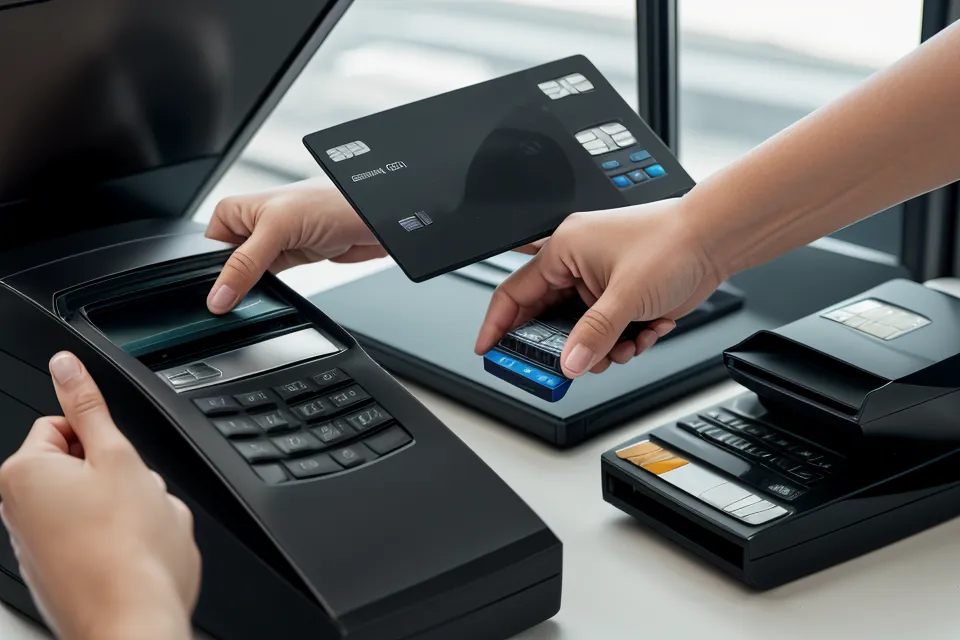
The Voucher Changes What the Agent Asks For
Book through an aggregator with pre-negotiated debit terms, and the reservation shows up already flagged as settled. The agent scans it, sees a zero balance, and skips most of what a debit customer would otherwise face — a return flight itinerary, a second form of ID, occasionally something to confirm the address on file. Walk up without that voucher, just the card in hand, and you're the one answering for it, one question at a time, while the shuttle line outside keeps moving without you. I've found that booking cheap car rentals in Las Vegas using Trip.com for business smooths over exactly this, mostly because it removes the debit-card guesswork from the LAS leg specifically. I still think about a rental shuttle line at Denver a while back, pulling up two screenshots side by side on my phone — one straight off a counter's own site, one from an aggregator — mainly to prove to myself the gap was worth the extra step of booking ahead. It usually was, often enough that I don't walk up cold with just a debit card anymore unless the trip is short enough not to matter. I don't run a full price spreadsheet between aggregator and direct rates on every single trip — that's a separate habit from this one — but the debit-friendliness question is its own filter, and it gets checked before price even enters the picture.

What a Hold Actually Takes Out of a Checking Account
A hold on a credit card is more of a promise than a withdrawal — the bank blocks off a slice of your credit line, and nothing physically moves unless you actually damage the car or bring it back empty. A hold on a debit card works differently. It is money gone from the account, sitting in a pending status the bank controls rather than you. If the counter wants a five-hundred-dollar deposit, that's five hundred dollars missing from whatever else the checking account needed to cover, and agencies often quote a release window of up to fourteen business days — nearly three weeks before it's yours to use again. I track enough of this by airport that the Post-it notes stuck along my monitor bezel have started to look less like reminders and more like an amateur filing system, and the stack of printed rental agreements with margin notes scrawled next to the keyboard isn't much tidier. None of that changes what the hold does to the balance in the meantime. It just means I notice it coming.
The Debit Question Shows Up Everywhere Else Too
The debit card question doesn't stay contained to the counter, either. Agents lean harder on the insurance upsell once they've clocked that you're not carrying a credit card with secondary coverage attached, so that pitch tends to run longer, not shorter, right when you're already juggling a hold. Some travelers try to dodge the whole debit conversation by picking an off-airport location instead, though that usually trades counter friction for shuttle time, and it's rarely a clean swap. Book last-minute and the debit-friendly vendors are sometimes the first to run out of inventory, since the aggregator deals that smooth things over tend to get snapped up early. And the 'compact' listed on the booking screen has never once matched what's waiting at the lot in my experience, which matters more than it should when you're also trying to keep a hold-sized cushion in the account for whatever shows up instead.
A flexible cancellation policy matters just as much on the business side, and I've leaned on the best car rental sites with free cancellation for business trips more than once when a meeting moved and the whole itinerary had to shift on short notice.
Family trips complicate things further. On the yearly national parks run we do every spring — kids in the back, gear swapped at the rental lot before the drive down to the Utah parks — a bigger hold has to share room with park passes and everything else riding on the same account, and I always check the rental car additional driver fee comparison for family vacations before adding my wife as a second driver, since that fee structure varies more by brand than the base rate does.

Renting for a full week instead of a long weekend usually knocks the daily rate down enough to notice, one-way drops between airports add their own fee on top of everything else, and a chunk of the supplemental insurance pitch at the counter can be skipped entirely if you already carry coverage through a card or a separate policy. None of that is specific to debit cards, but it all gets more expensive to get wrong when part of your cash is already sitting in a pending hold.
Which One Should You Actually Book?
Both paths get you a car. The difference is where the friction lands and how much of your own cash sits in limbo while it does. Walk up with just a debit card when the trip is short, your account can absorb a few weeks of a hold without strain, and you've got a return flight ticket and photo ID ready to answer whatever the agent asks. A walk-around at pickup catches most of the rest — more than once I've climbed into a car missing the extra key we'd requested, no small thing on a trip with no time to circle back to the counter. Lean on a prepaid aggregator voucher instead when the hold would actually hurt, when the trip is tight enough that you can't afford a counter agent having a slow morning, or when handing over a settled balance sounds better than handing over a debit card and hoping for the best. Clarice Newsome, a reader out of Phoenix who trades her own counter notes with me now and then, asked recently whether the voucher route works the same at every brand, and the honest answer is no — it depends entirely on which agencies that particular aggregator has actually negotiated debit terms with, which is worth checking before you assume the filter will save you the trouble.