Four digits. That's the length of the confirmation number that loaded on my phone at baggage claim in Denver, and a number that short on an airport car rental booking is usually a tell — it means the car came from a small local partner still building out its reservation system, not a national brand with decades of bookings stacked behind it. I checked the email twice before trusting the shuttle board. Most of my Southwest travel rotation runs Salt Lake out to Phoenix, Las Vegas, Denver or Dallas, and since the expense policy changed and self-booking landed on my plate, business travel details that small stopped feeling random and started feeling like information worth tracking.
Quick note before the comparison: the aggregators and vendors named here pay me a commission if you click through and book, and that commission doesn't change what I'll say about a counter agent trying to push an add-on. I've run these platforms across my own hub rotation, not in a lab, and if one of them steers you toward a bad pickup experience, I'll say so regardless of what it pays out.
Most weeks I'm flying one of four routes out of Salt Lake, and being 43 with two teenagers at home keeps my tolerance for airport nonsense low. I keep rough notes on every booking, which is how a comparison between Discover Cars and Trip.com turned from a hunch into something closer to a pattern.
What a Four-Digit Confirmation Number Taught Me About Denver Inventory
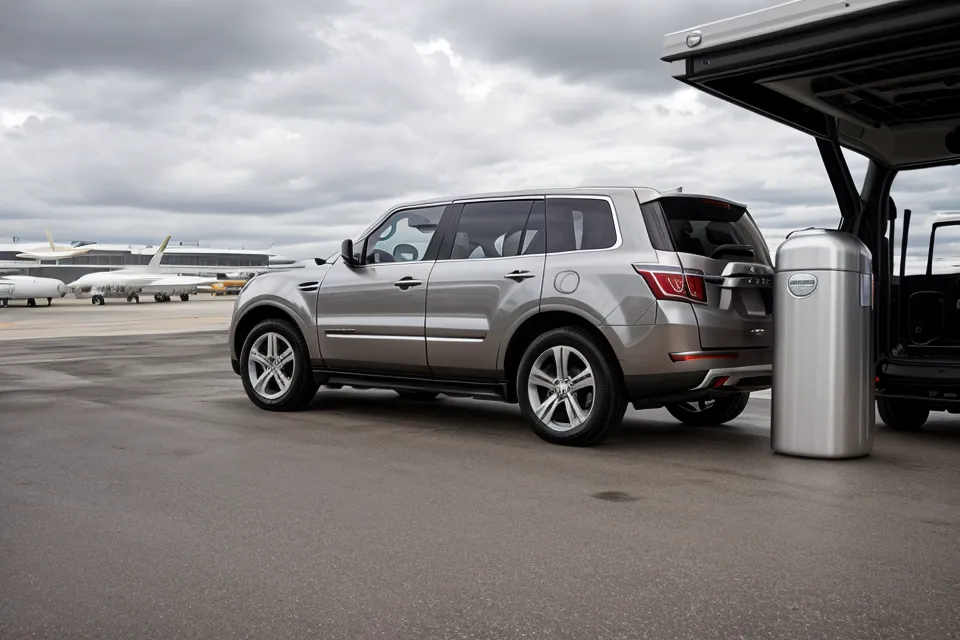
Discover Cars has become my default for the Denver and Phoenix runs since the policy change, mostly because on something like two-thirds of those bookings the headline rate has beaten walking up to a big-name counter cold. On one Denver trip I needed a mid-size SUV with enough trunk room for sample cases and a winter coat I didn't need, and the aggregator pulled the car from a local partner operating out of the rental facility off Peña Boulevard — one I hadn't heard of before that confirmation email showed up short.
What I actually like about the platform is how much of the protection plan is spelled out before I'm anywhere near a counter. Most agents save the real insurance conversation for when you're tired and standing in front of them at the Phoenix Sky Harbor International_Airport rental row, talking about 'full coverage' in terms vague enough to make you nervous. Reading the terms first, at my own desk — the one with the stack of printed agreements and my own margin notes piled next to the keyboard — makes it a lot easier to say no to that pitch later. More on how those counter conversations usually go is in my notes on Discover Cars and my Phoenix booking habits.
But the aggregator math carries a tax: off-airport partners. In Vegas once, a lower rate meant a shuttle ride long enough that I checked my watch twice before the pickup lot came into view — fine on a Friday return, rough on a tight morning. I tried routing around all of it once by trusting a hotel concierge in the Denver area, who swore the on-property shuttle rental counter would beat anything online; it didn't, the posted aggregator rate undercut it without much effort, and the car that showed up was a smaller trim than what the desk had described.
When Does Trip.com Actually Win?
Trip.com is the backup in my rotation, but it earned its keep one weekend when Denver inventory dried up and every other site showed sold out for anything bigger than a subcompact — pulling from global and off-airport vendors the US-first aggregators skip is the one thing it consistently does better. Scott Mulroney, a buddy who transferred into the Denver region not long ago, texts me before almost every trip asking which platform to use that week, then books whichever one loads first anyway — which is its own argument for just picking one and sticking with it most of the time.
The bundle option is where Trip.com actually competes for the family side of things. Our annual spring break run through the Mighty 5 national parks usually needs a full-size SUV that can handle Zion, Bryce and Arches without my two teenagers trading elbows in the back seat, and folding the car into the same itinerary as the hotel in Moab or Springdale means one confirmation email instead of three. My wife runs a small bookkeeping firm and has opinions about tracking three separate charges versus one, so the bundle earns its keep there too.
Where Trip.com falls short is policy visibility on the individual rental. You sometimes have to dig to find out whether a 'great deal' includes a shuttle or expects you to Uber out to a lot in Tempe, which I found out after a late Phoenix arrival turned into exactly that. More on how that pattern plays out across different hubs is in what repeated Southwest sales trips taught me.
Matching the Platform to the Hub: Southwest Airport Rental Basics
AirportRentalCars solves a different problem: on-airport pickup, full stop. With a 6:15 AM flight out of Salt Lake, I have no appetite for a shuttle at 4:30 in the morning, and AirportRentalCars filters down to exactly that — majors plus Sixt and Fox, booking flow clean enough that I'm not hunting for the catch. The convenience costs something, though: that on-airport-only headline price often runs noticeably above what the off-airport deals show on the same dates.
Put plainly: Discover Cars wins the price-gap argument on most Phoenix and Denver runs if a short shuttle doesn't bother you, AirportRentalCars earns its keep on the early-morning returns where every extra minute of sleep counts, and Trip.com is the one that finds a car when the others post sold out for a convention weekend or a holiday. A handful of other line items matter no matter which one you pick. Adding a second driver costs a different amount from vendor to vendor, so that's worth checking per booking instead of assuming the fee is standard. Paying with a debit card instead of a credit card usually means a bigger deposit hold and sometimes extra paperwork at the counter. A one-way rental, picking up at one hub and dropping at another, carries its own fee that can erase whatever the headline rate saved. Third-party coverage priced outside the vendor is worth comparing against whatever waiver the counter agent quotes, since the two numbers rarely match. Whether to prepay the tank or return it full depends mostly on whether there's a gas station anywhere near the return lot at the hour you're driving in, which the booking page never mentions. And the total due at pickup is not the same figure as the headline number once taxes and facility charges stack on, so I click through to the all-in total before comparing two listings at all. A weekly rate almost always beats stacking daily ones on the longer sales swings, too.
Either way, I've learned to verify everything with the agent standing in front of me — fuel level, exact trim, whether the spare is actually a spare — before walking the car around and signing anything. The aggregator gets you the price; the agent determines the car you actually drive off in. For a longer look at booking lead time and when rates tend to drop, see my notes on when to book for the best Southwest rates.
Family Trips Change the Math
Taking two teenagers through Capitol Reef and Canyonlands calls for a specific kind of vehicle — a mid-size or full-size SUV with a trunk that doesn't turn into a Tetris puzzle once the hiking boots and the cooler go in. A sedan is fine for a flat interstate hop to a Tuesday meeting; the moment the route tips into mountain grades or washboard gravel, that same rental class stops making sense no matter what the price comparison says. On our last trip I noticed a real gap between the 'compact' listed at three different brands and what actually sat on the lot.
Discover Cars tends to show more accurate photos of the actual fleet, where Trip.com leans on generic stock images more often — knowing whether you're getting a RAV4 or a smaller crossover matters when four people's gear for a week in the desert is riding in the back. A reader out of Phoenix, Clarice Newsome, emailed me a while back after getting burned by a daily mileage cap on a cheap rate; now she won't book anything without unlimited mileage, no matter which platform shows the better headline number.
Trip.com's promo codes also drop more often than I'd expect, useful if you're booking two or three months ahead of a holiday window — I've caught back-to-back promo stretches more than once. For the solo sales runs, though, where the only goal is gate to meeting without overpaying, Discover Cars' granularity usually wins. I've written separately about why I choose Discover Cars over loyalty programs, which covers the status-versus-rate trade-off in more depth than fits here.
Picking Between the Two, Trip by Trip
Look, I've signed enough electronic pads and ridden enough shuttles that the choice mostly comes down to what you value on a given trip: insurance transparency you can read at your own desk, or a bundle that collapses three confirmation emails into one. Discover Cars and Trip.com both have a place in the rotation; I just reach for the first one more often, because knowing what a counter agent might pitch before I'm standing in front of them is worth more to me than a promo code.
If a regional run is coming up on your calendar, check current rates before you lock anything in — they shift faster than the weather changes in the mountains. Discover Cars is usually my starting point for checking whether I'm getting a fair rate or just paying for old habits.
| Product | Rating | |
|---|---|---|
| Discover Cars Top Pick | 9.2 | Read More → |
| AirportRentalCars | 8.5 | Read More → |
| Trip.com | 8.1 | Read More → |
Discover Cars
Pros
- + Headline rates consistently beat direct booking on most PHX and DEN runs
- + Protection plan terms are clear before you reach the high-pressure counter
- + Excellent inventory of SUVs for mountain-west terrain
- + Straightforward cancellation that actually returns funds quickly
Cons
- ✗ Off-airport partners can add 20 minutes to your shuttle commute
- ✗ Counter agents at partner brands still try the hard upsell